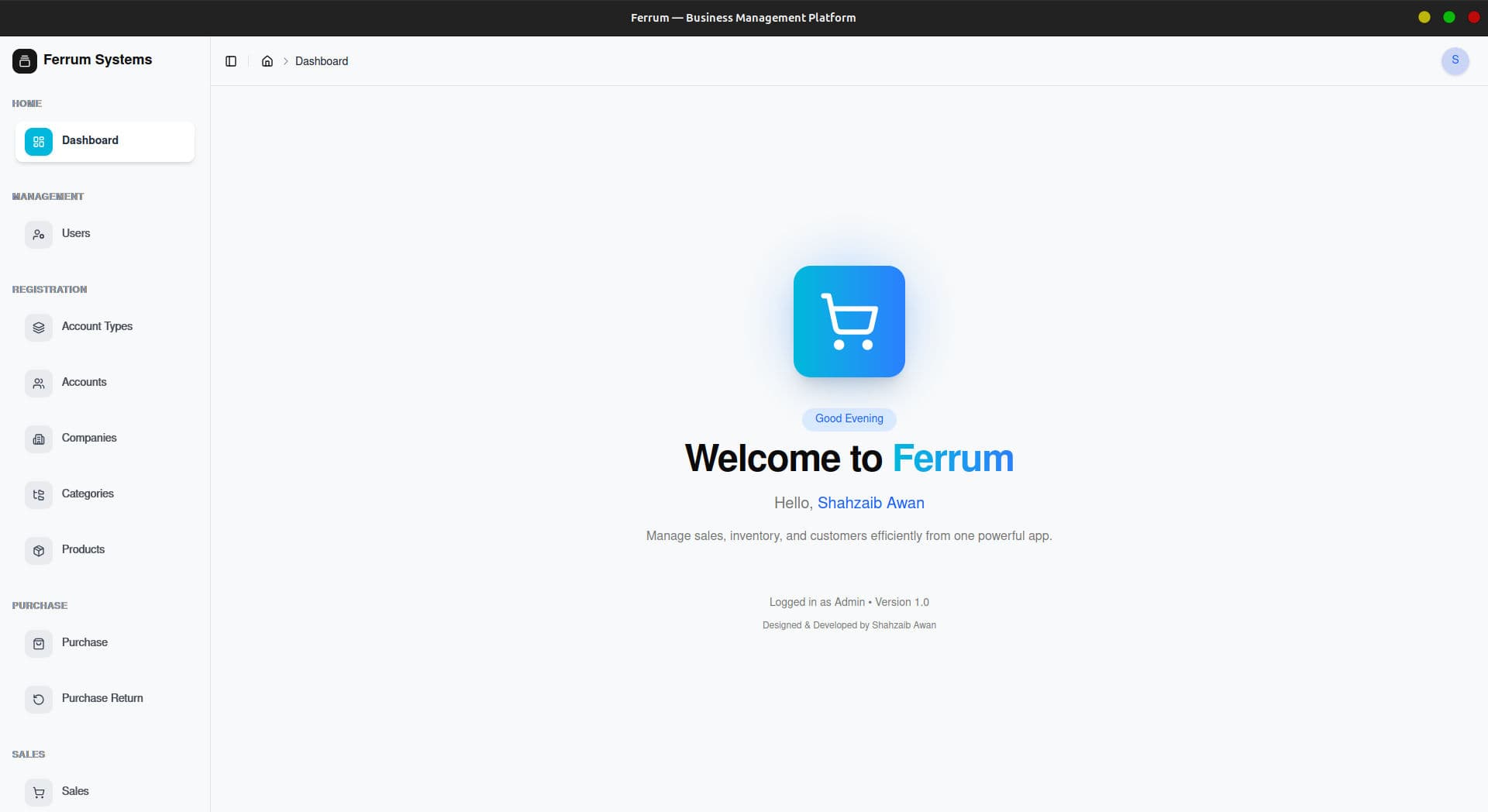
Ferrum ERP – Inventory & Accounting Management System
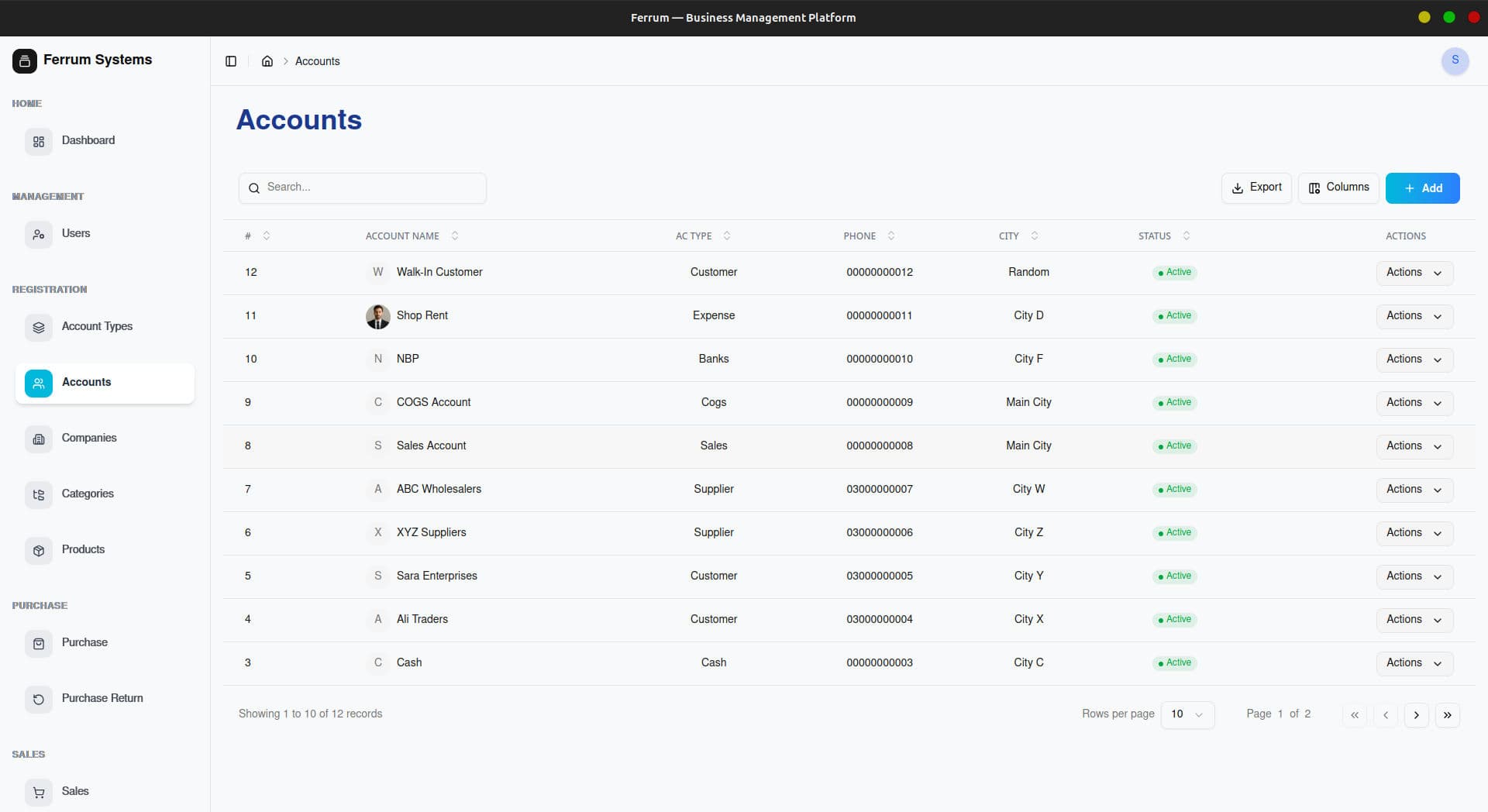
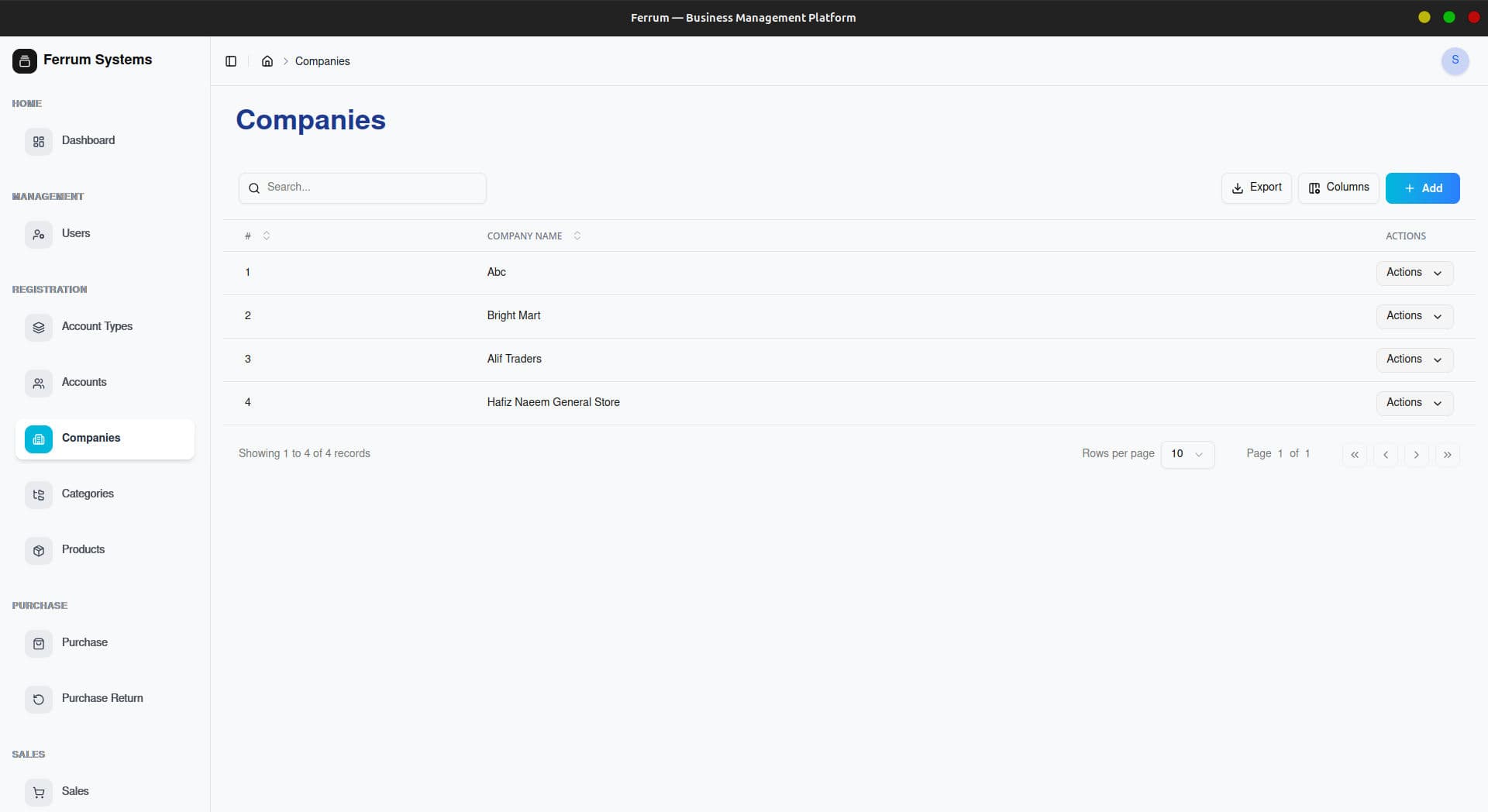
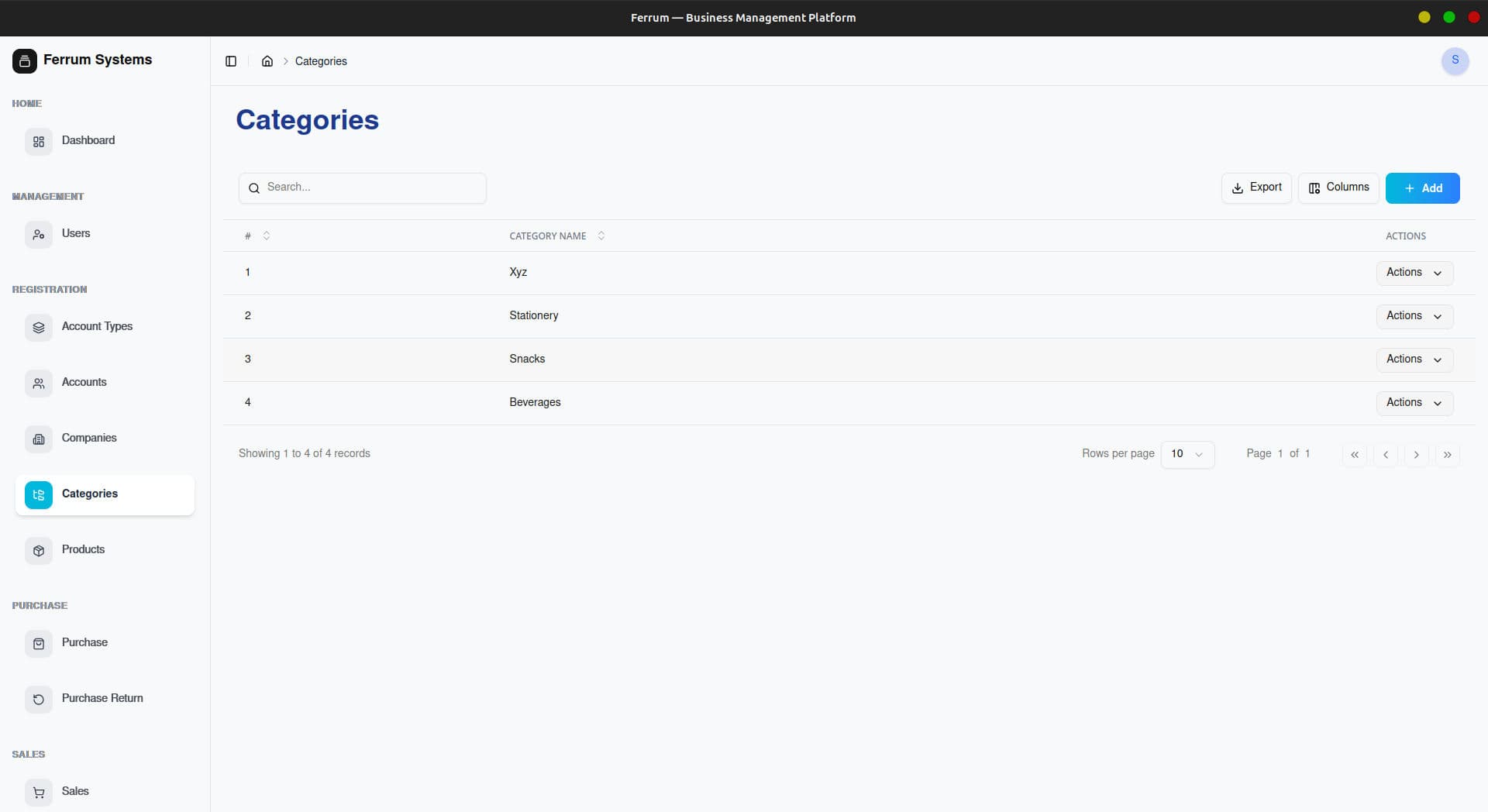
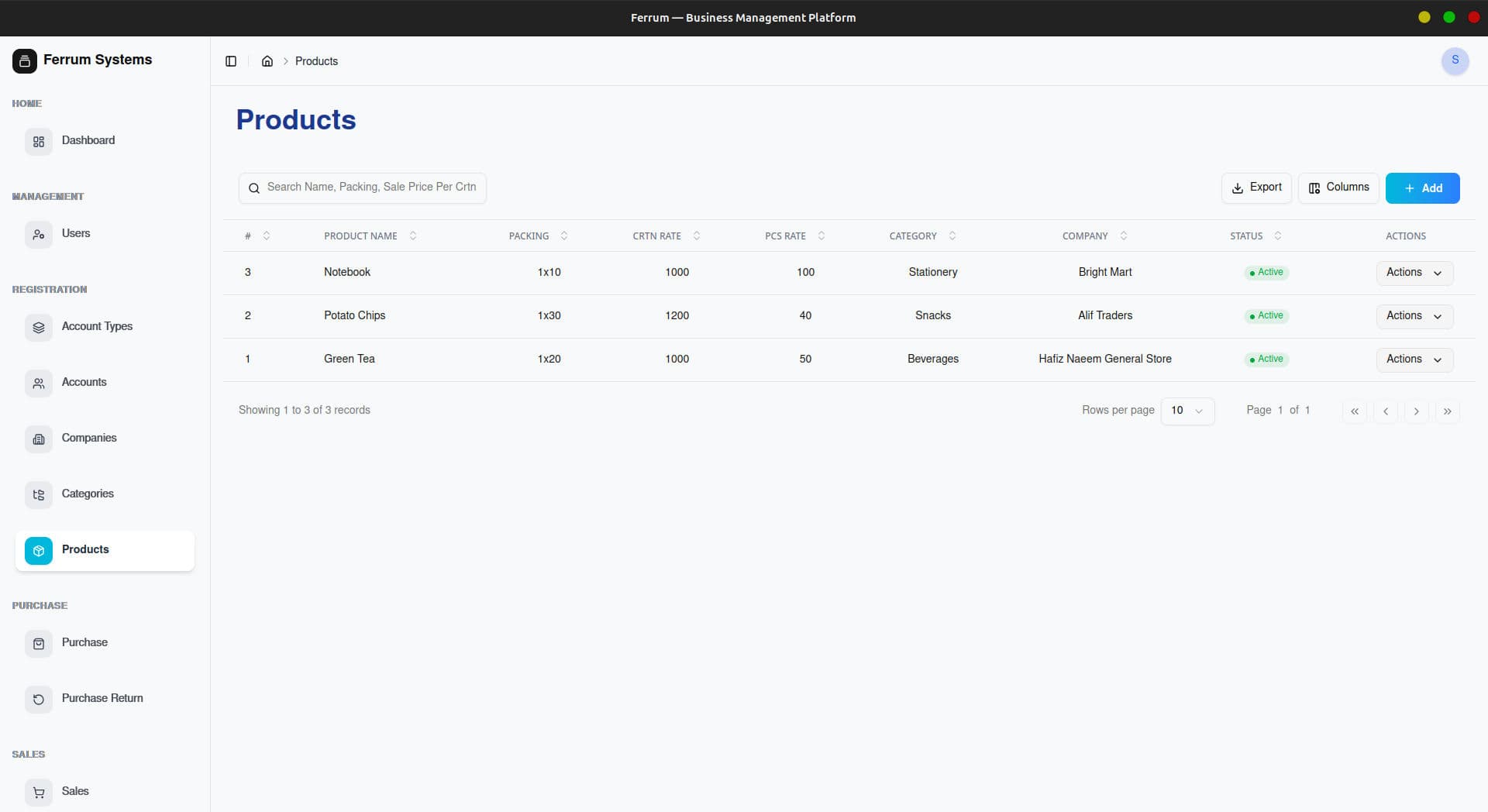
Ferrum ERP is an offline-first, cross-platform desktop inventory and accounting management system built with Tauri 2.0, Rust, React 19, TypeScript, and SQLite. Designed for retail stores and distribution businesses, the platform provides complete ERP workflows including POS operations, inventory management, purchase and sales processing, double-entry bookkeeping, financial reporting, stock valuation, and role-based access control. The system features automated financial statements, FIFO-based inventory costing, atomic transaction posting, secure local data storage, backup and restore functionality, and high-performance native desktop architecture powered by Rust and Tauri for fast startup times, low memory usage, and reliable real-world business operations.
- Client
- Hafiz Naeem General Store
- Team Size
- 1 members
- Timeline
- Feb 2026 — Mar 2026
- Stack
- 14 technologies
The story
Overview
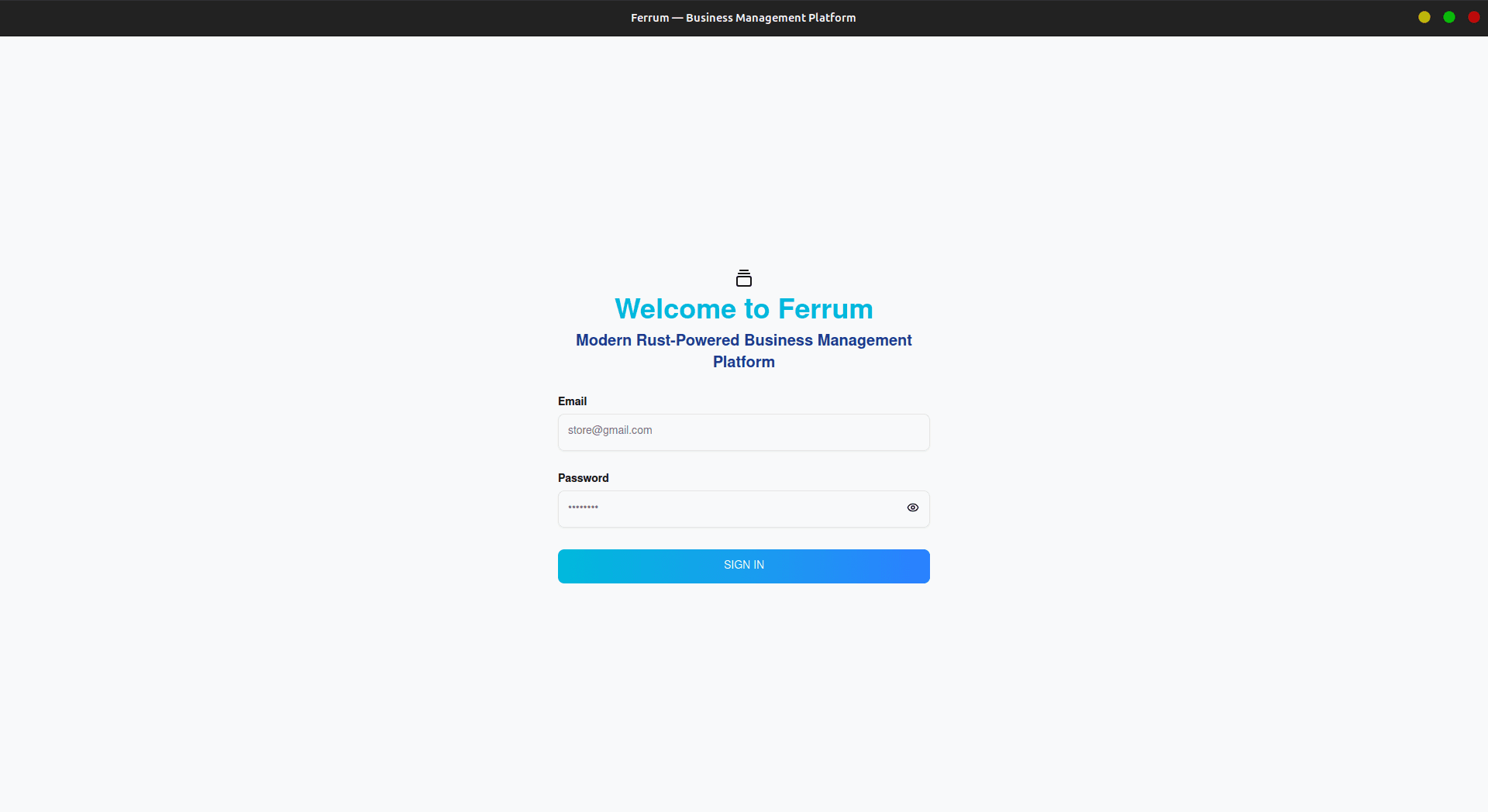
Ferrum ERP is an offline-first, cross-platform desktop ERP and distribution management system built for retail stores, wholesalers, and small-to-medium businesses. Developed using Tauri 2.0, Rust, React 19, TypeScript, and SQLite, the platform combines inventory management, POS operations, financial accounting, and reporting systems into a lightweight yet enterprise-grade native desktop application.
Unlike traditional Electron-based ERP software that consumes excessive system resources, Ferrum ERP focuses on high-performance native desktop architecture with fast startup times, low memory usage, and complete offline functionality. The application operates entirely on the user's machine using an embedded SQLite database, ensuring full data ownership, privacy, and reliability without requiring internet connectivity or recurring SaaS subscriptions.
The system was architected to simulate real-world ERP workflows while implementing production-level accounting systems, inventory valuation logic, atomic transaction handling, and role-based business operations.
Core Features
Inventory & Product Management
Ferrum ERP includes a complete inventory engine designed to manage stock movement, product costing, and real-time inventory valuation.
Inventory Features
- Product catalog management
- SKU and barcode support (in Future)
- Product categories and hierarchy
- Dynamic pricing management
- Real-time stock tracking
- FIFO-based inventory valuation
- Batch-level stock tracking
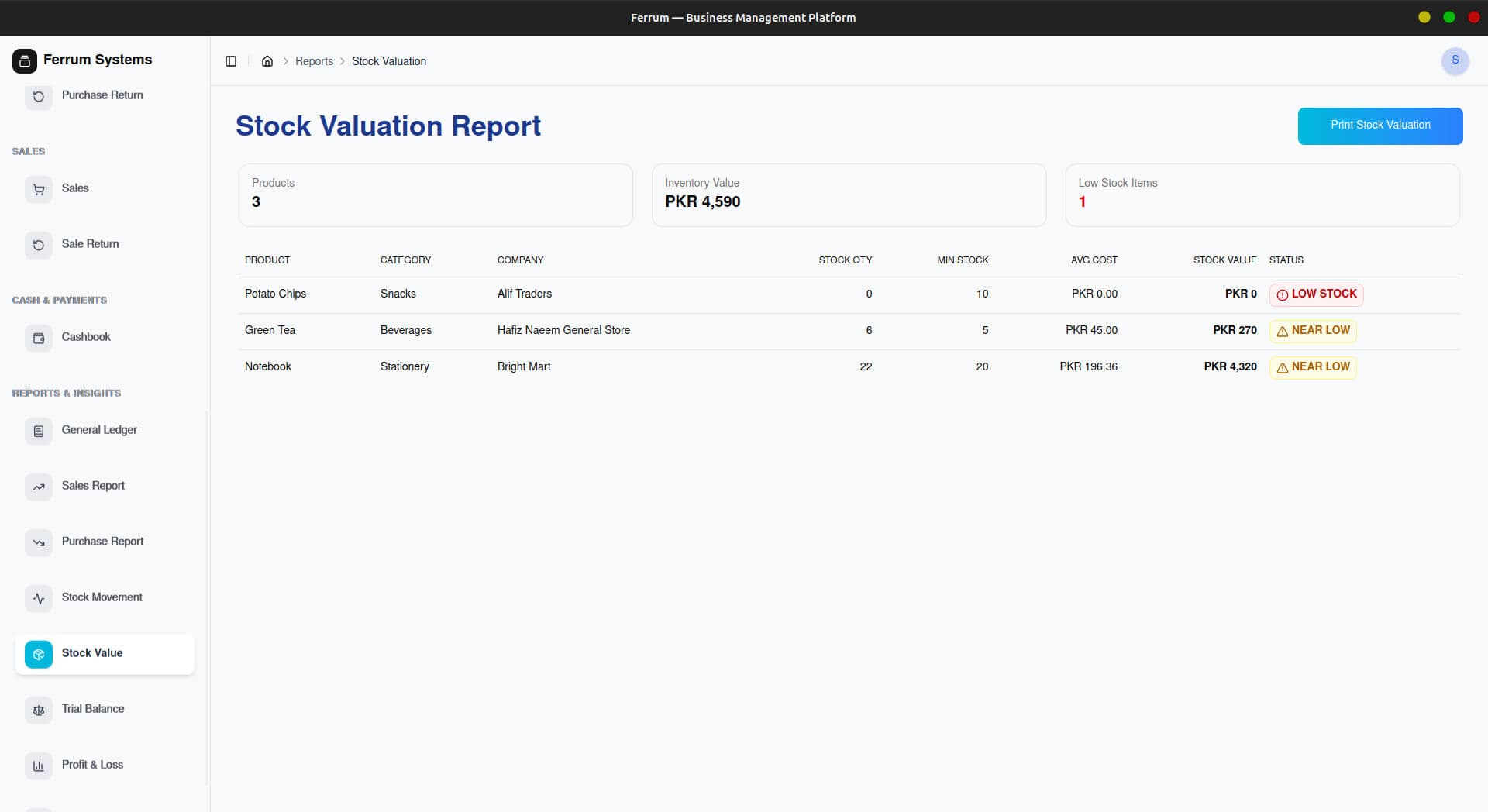
- Low stock and near-low stock alerts
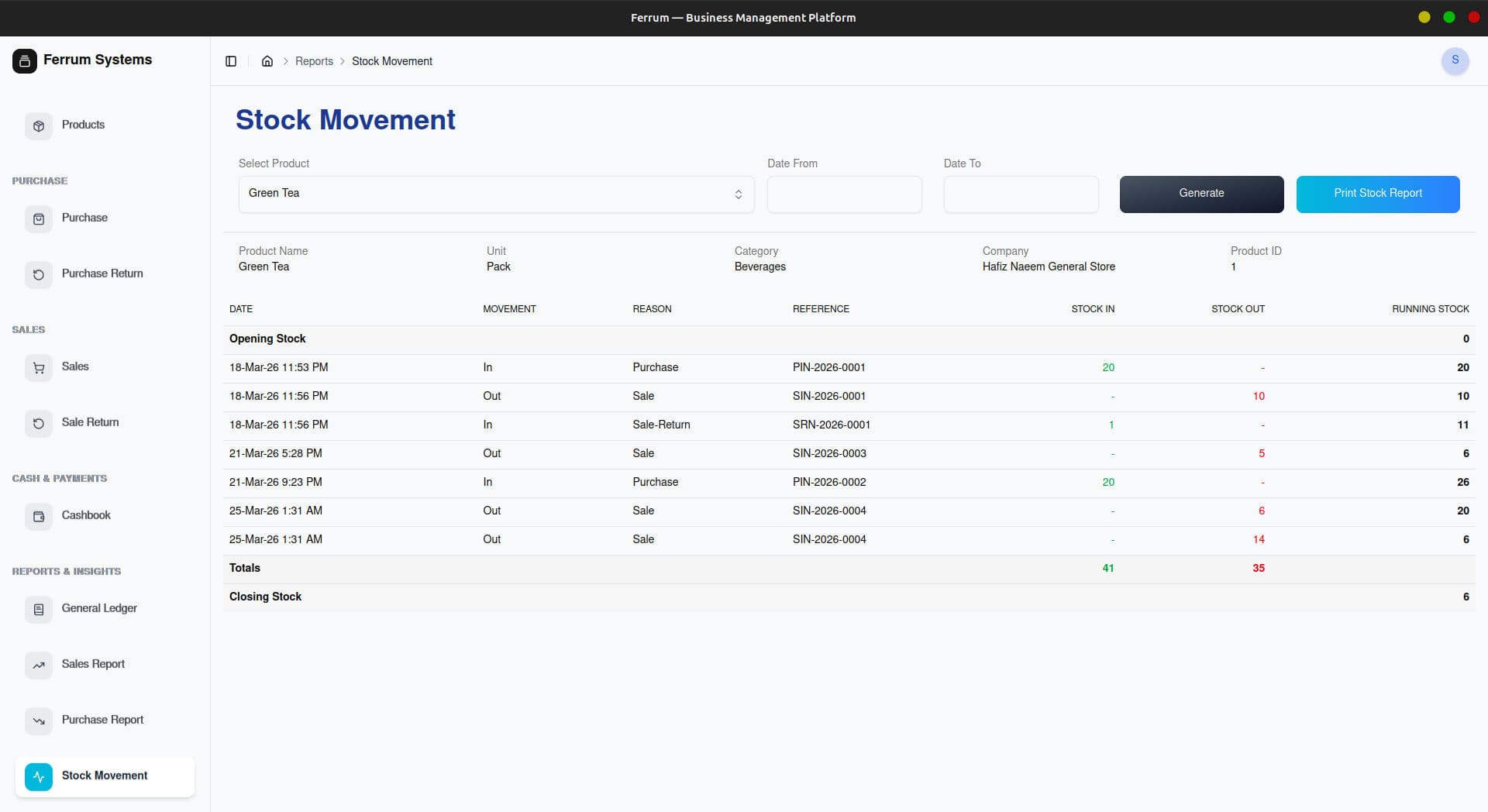
- Inventory movement history
- Product activation/deactivation
- Stock audit trails
- Bulk CSV and Excel import/export
The inventory system automatically updates stock quantities and valuation after purchases, sales, returns, and stock adjustments while preserving costing accuracy across all inventory operations.
POS, Sales & Purchase Operations
The platform includes complete retail and procurement workflows optimized for real-world business operations.
Sales Features
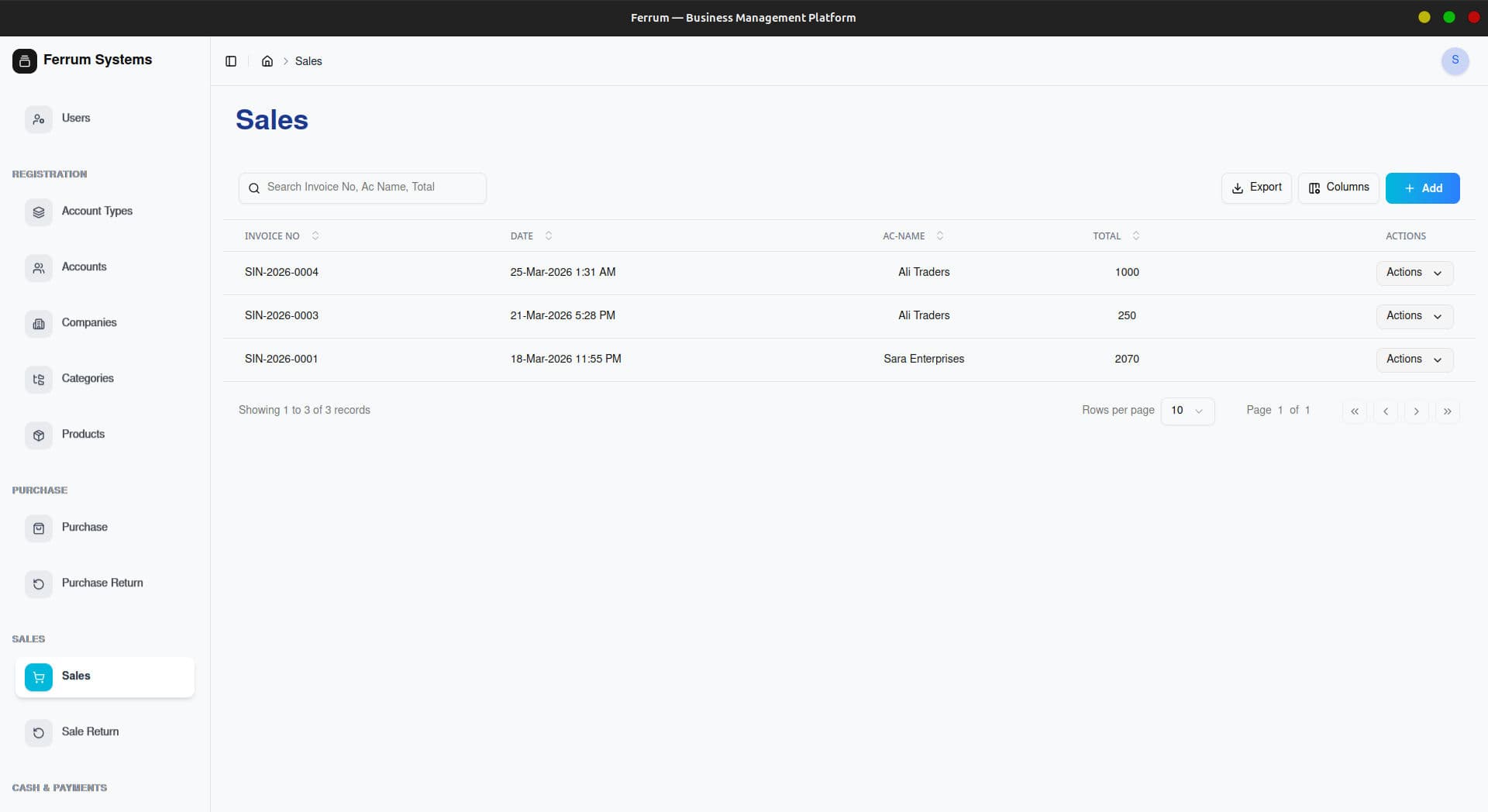
- Point of Sale (POS) interface
- Barcode scanning support
- Auto-increment invoice numbering
- Multi-item invoice processing
- Customer account handling
- Discount and partial payment support
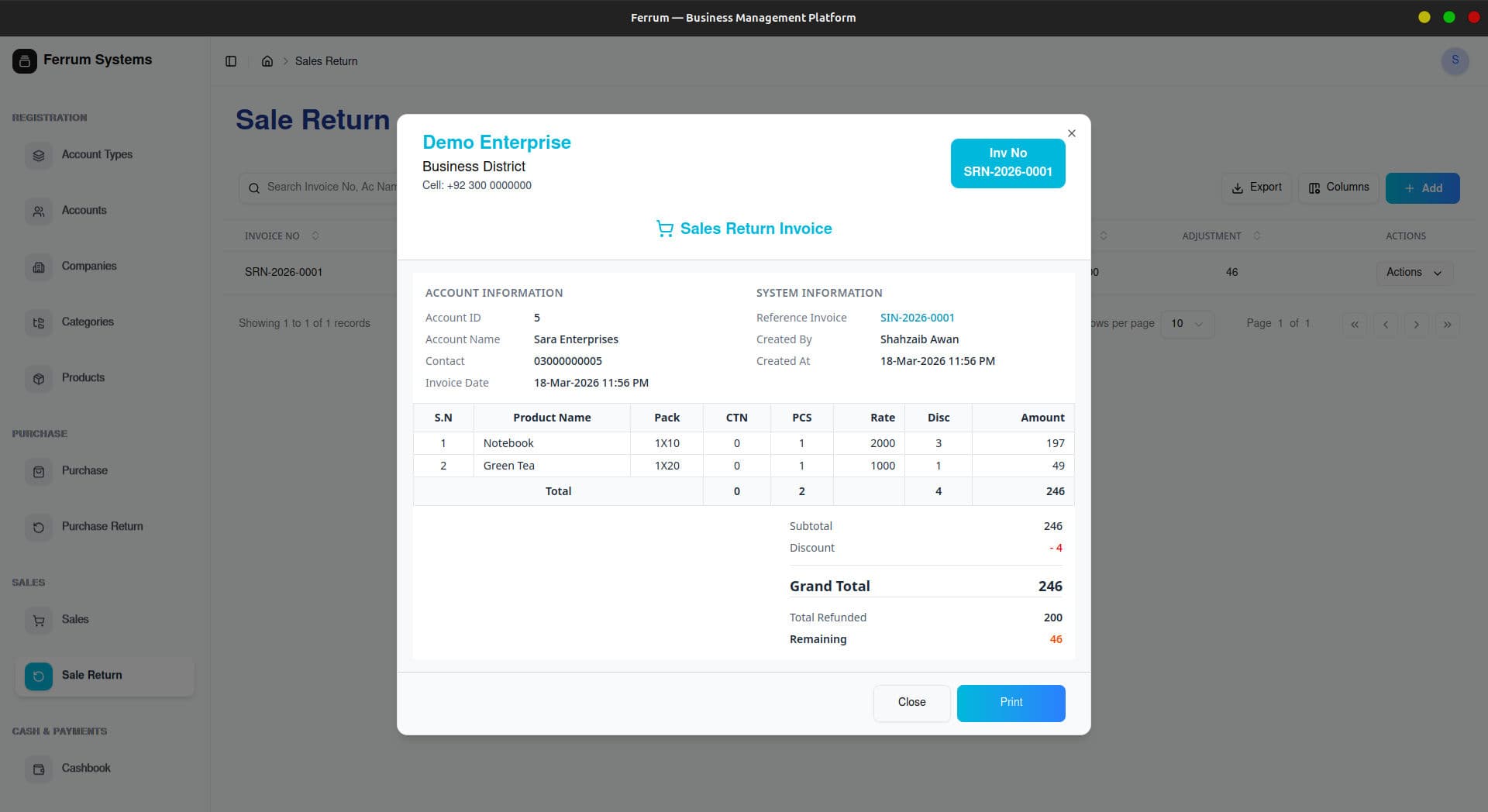
- Sales return workflows
- Invoice printing and PDF export
- Revenue and receivable tracking
Purchase Features
- Supplier management system
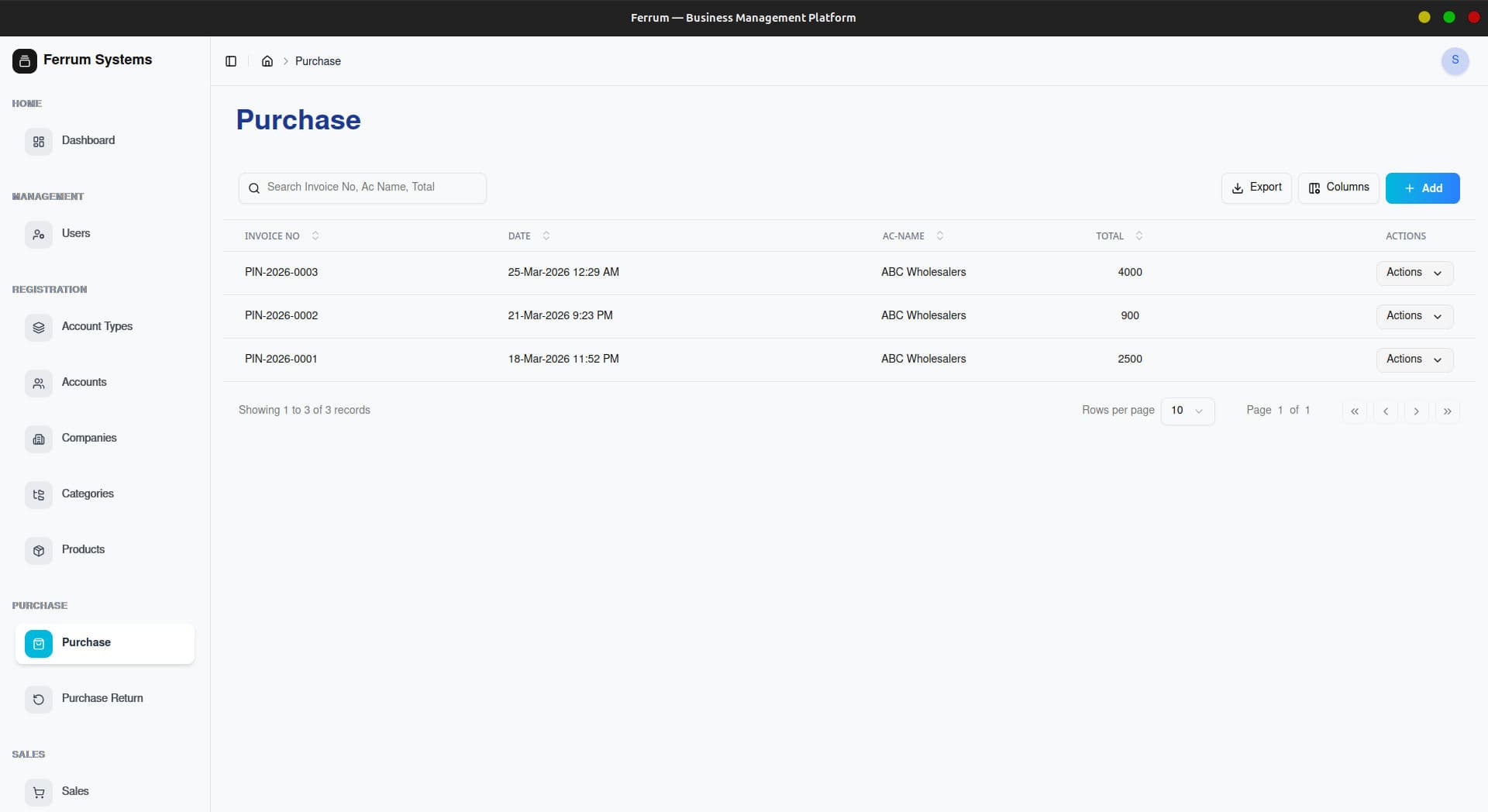
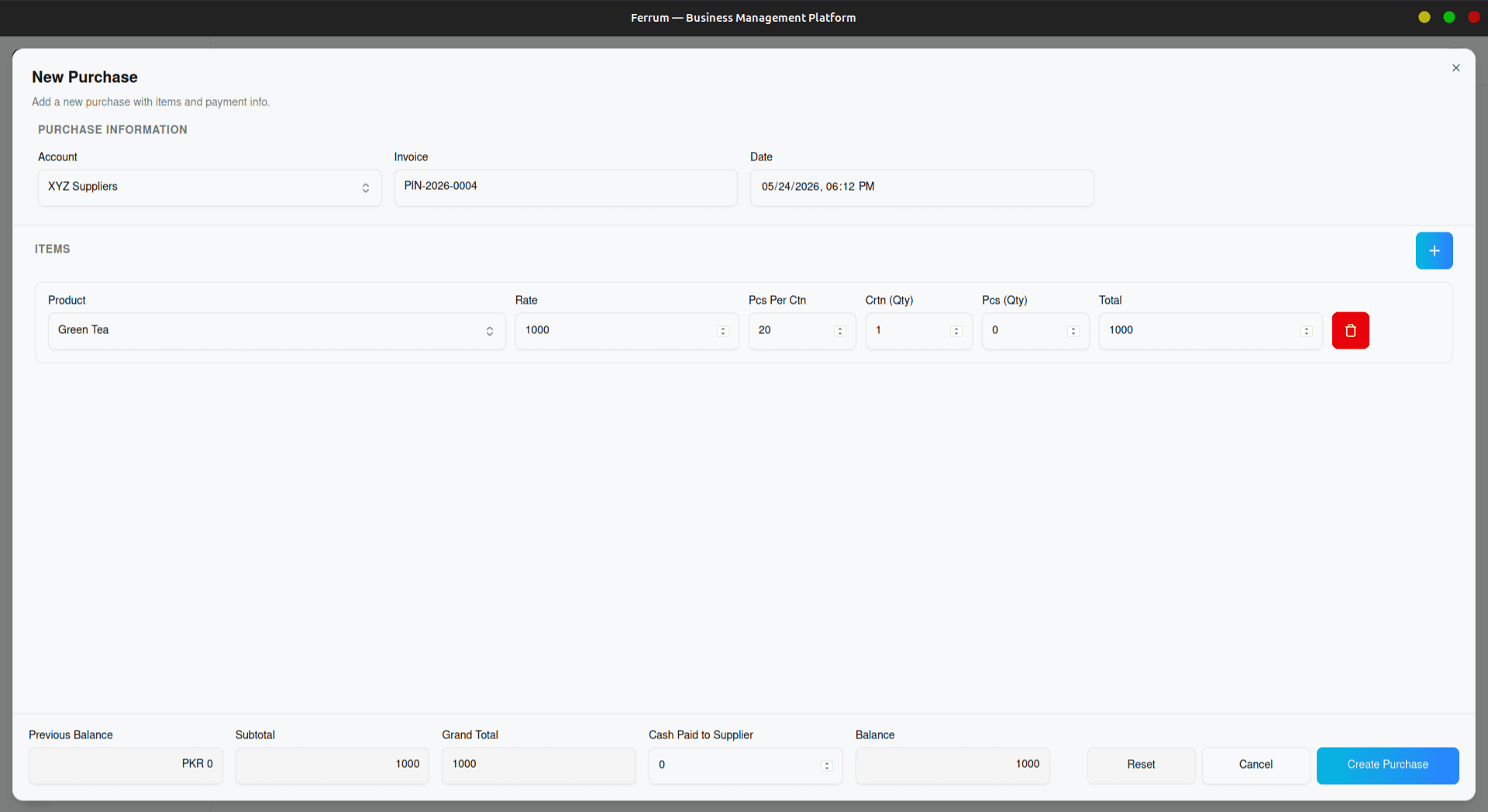
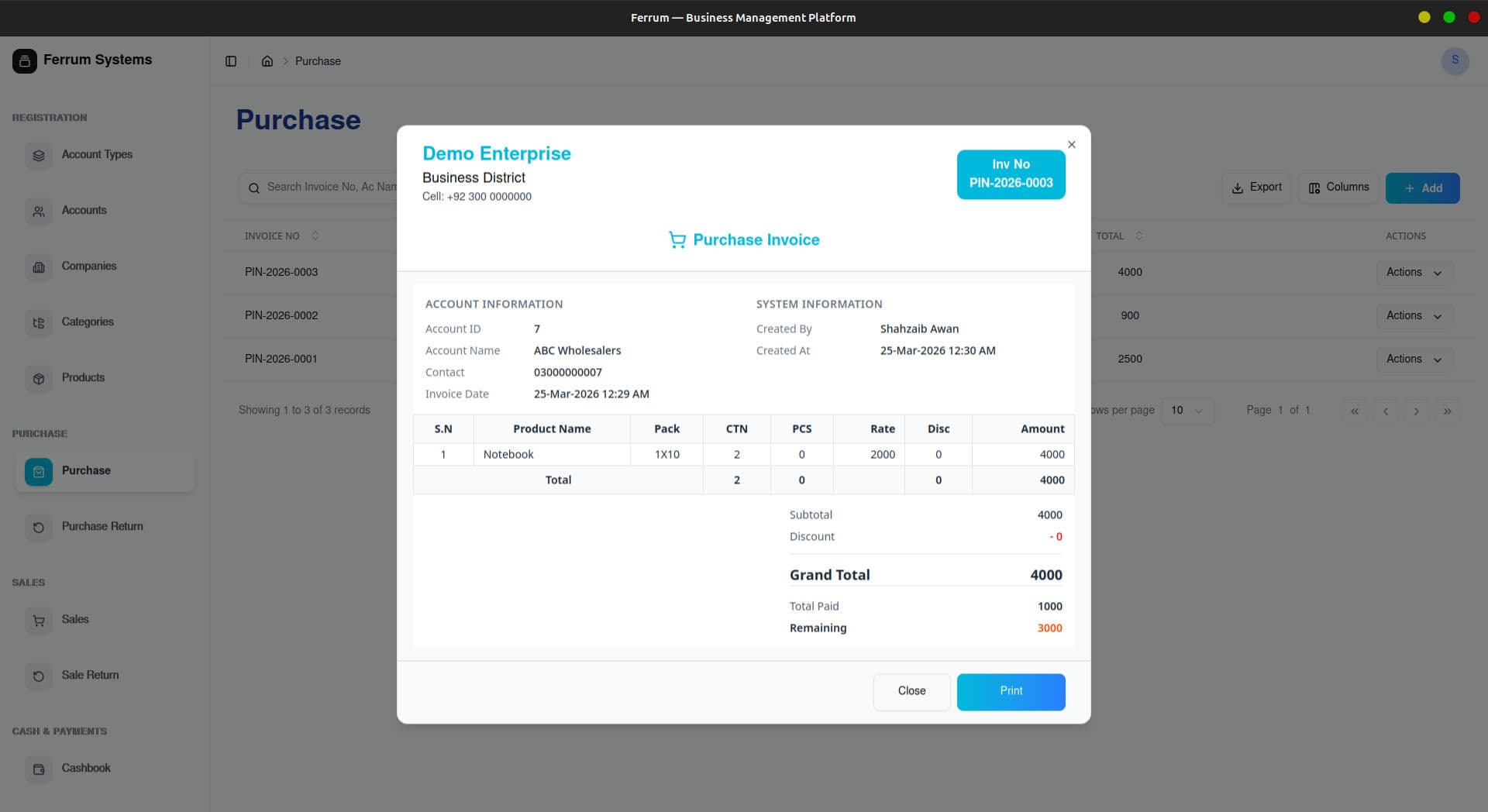
- Purchase invoice workflows
- Goods receipt handling
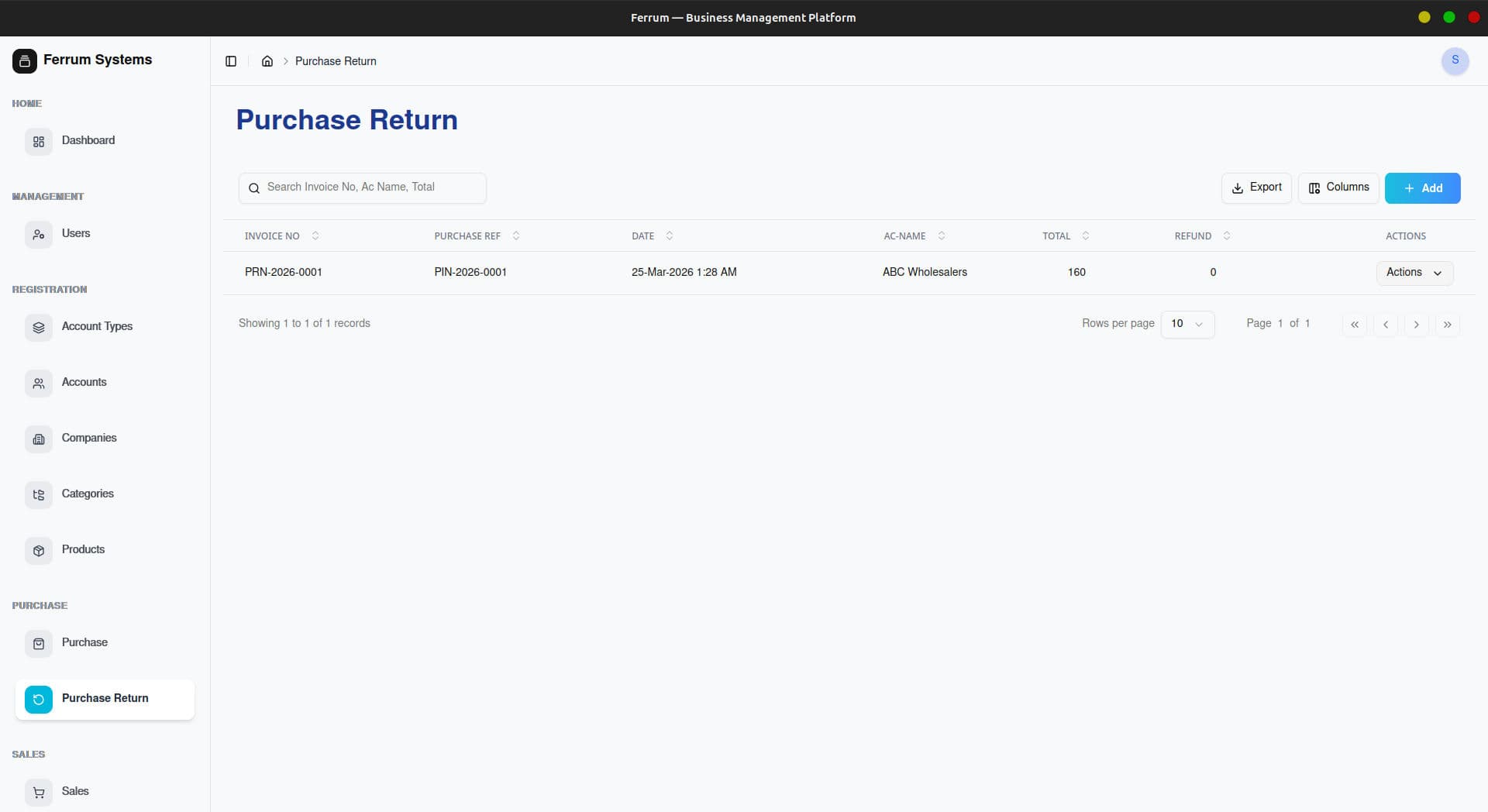
- Purchase return processing
- Supplier payable management
- Inventory synchronization after procurement
- Cost updates and batch tracking
Every transaction automatically updates inventory, accounting ledgers, customer/supplier balances, and financial reports in real time.
Double-Entry Accounting Engine
Ferrum ERP contains a complete enterprise-style accounting system based on double-entry bookkeeping principles.
Accounting Features
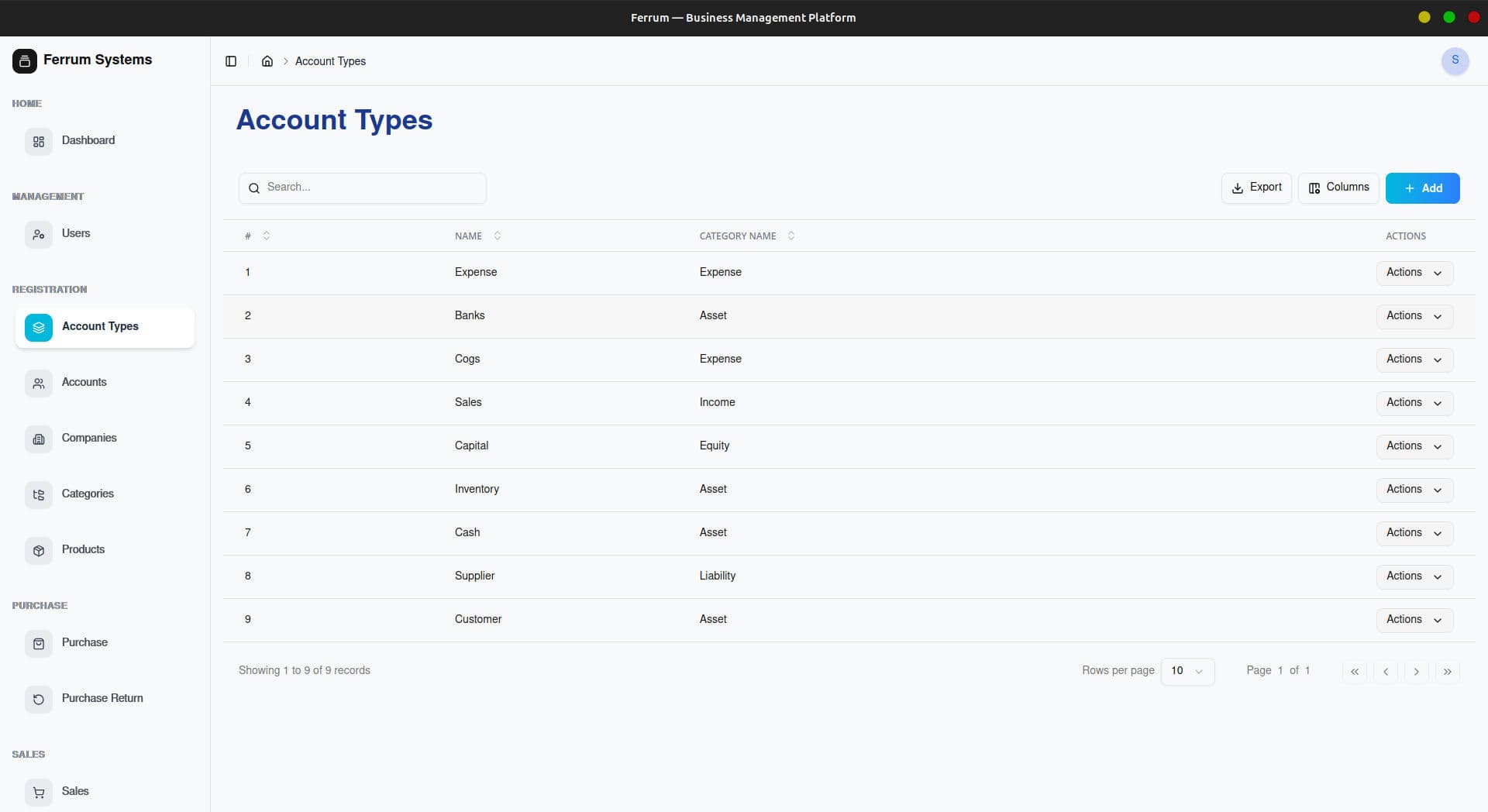
- Chart of accounts management
- Assets, liabilities, equity, income, and expense accounts
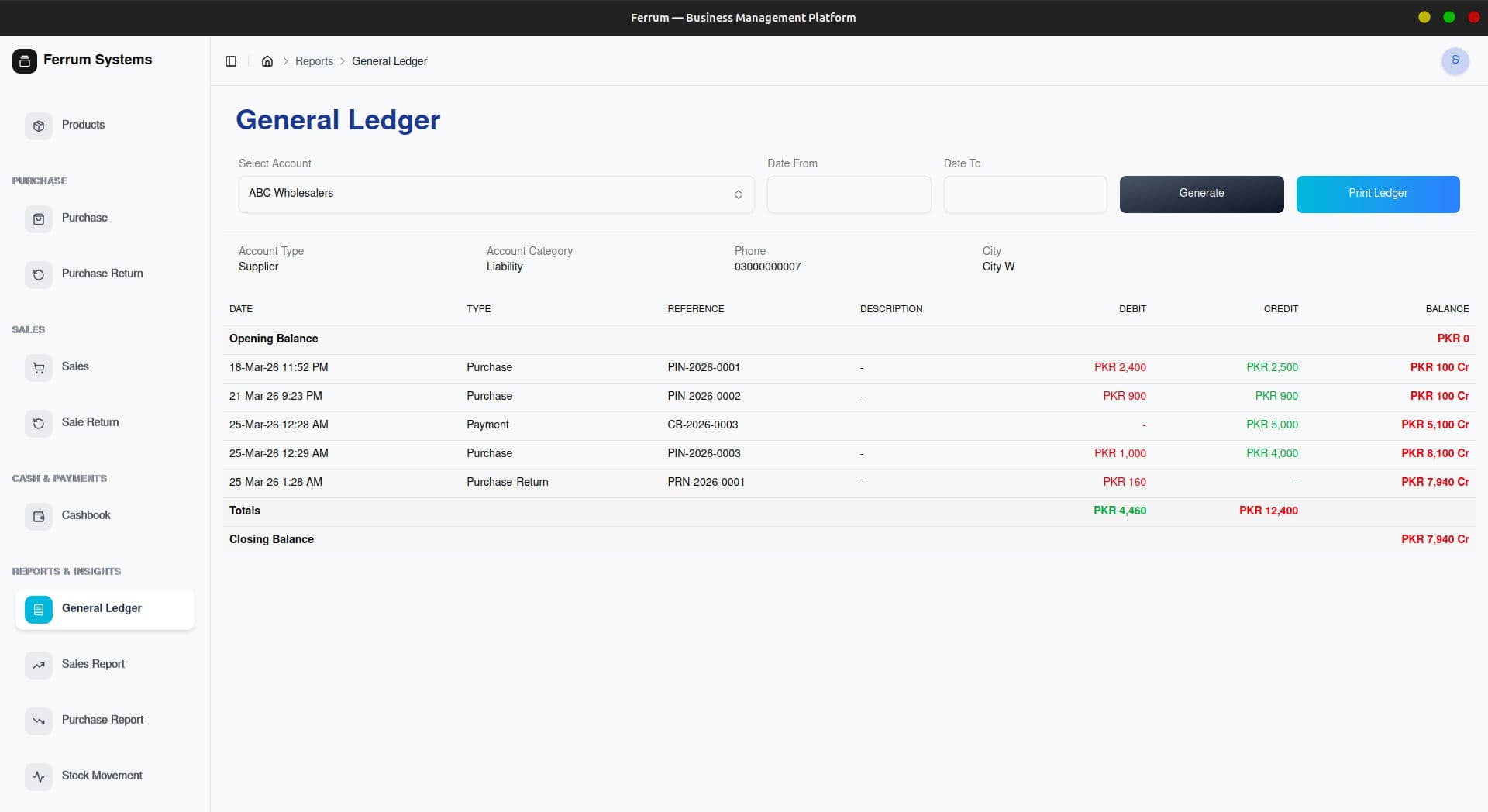
- General ledger with running balances
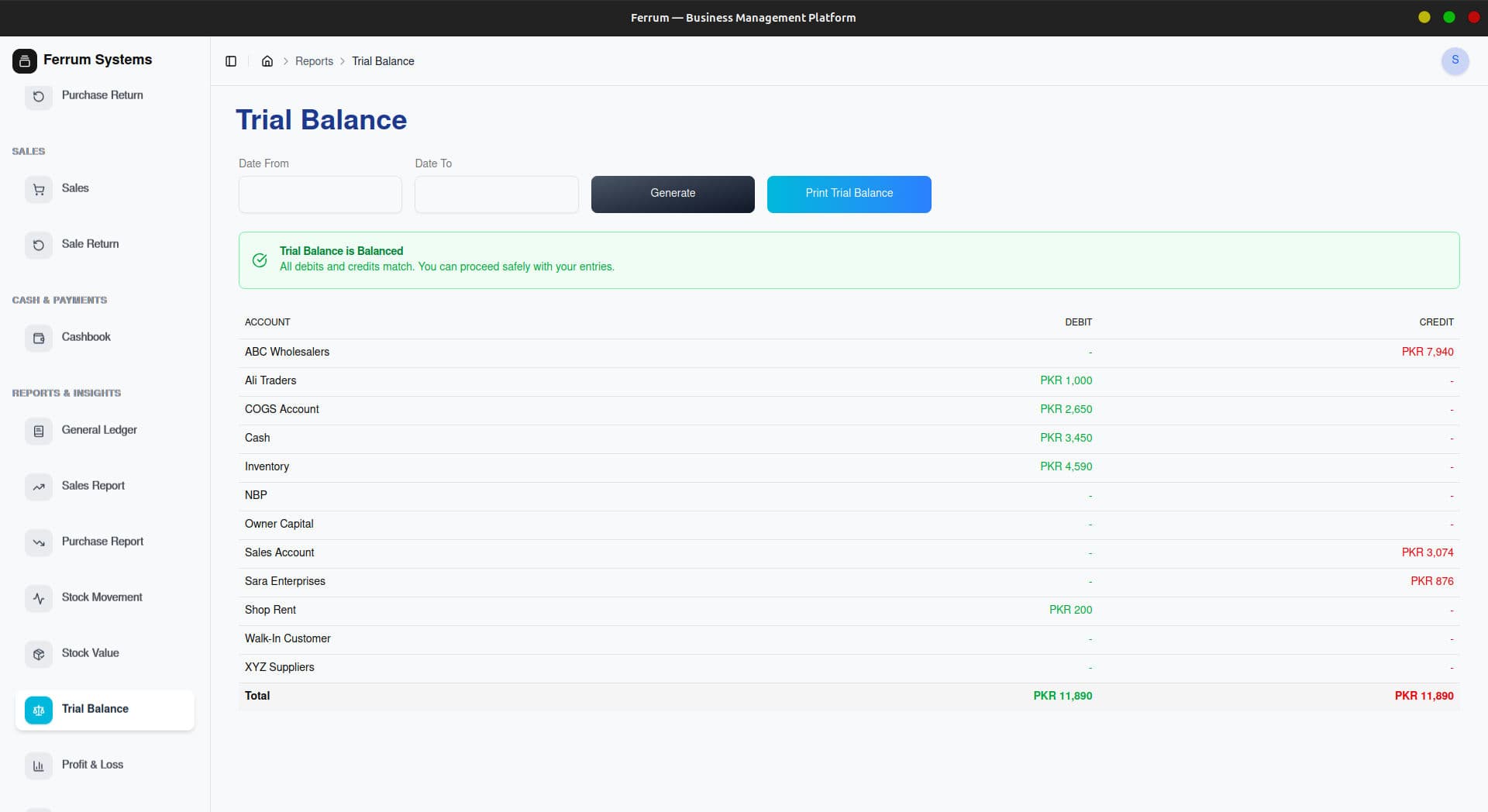
- Trial balance generation
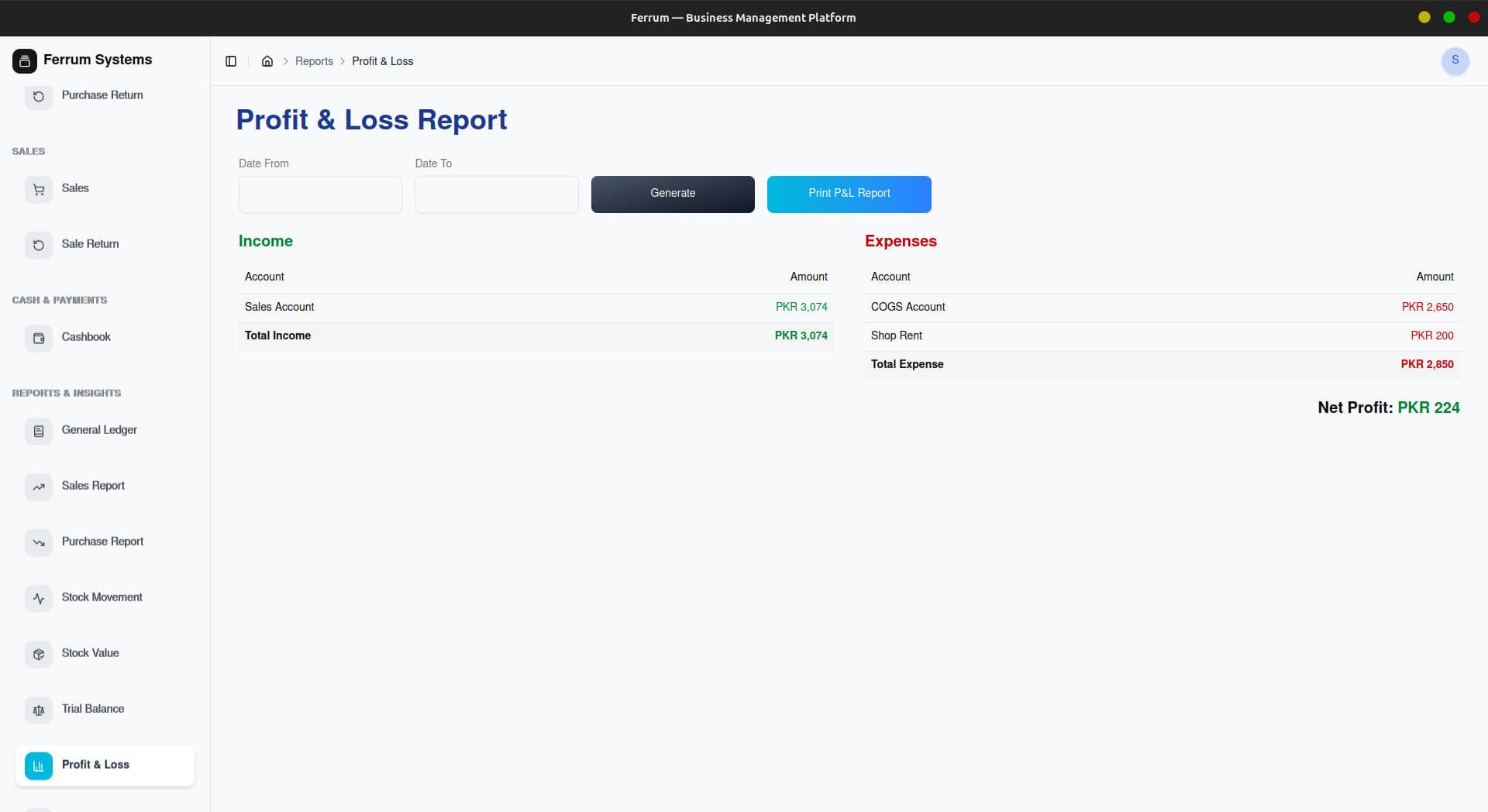
- Profit & Loss statements
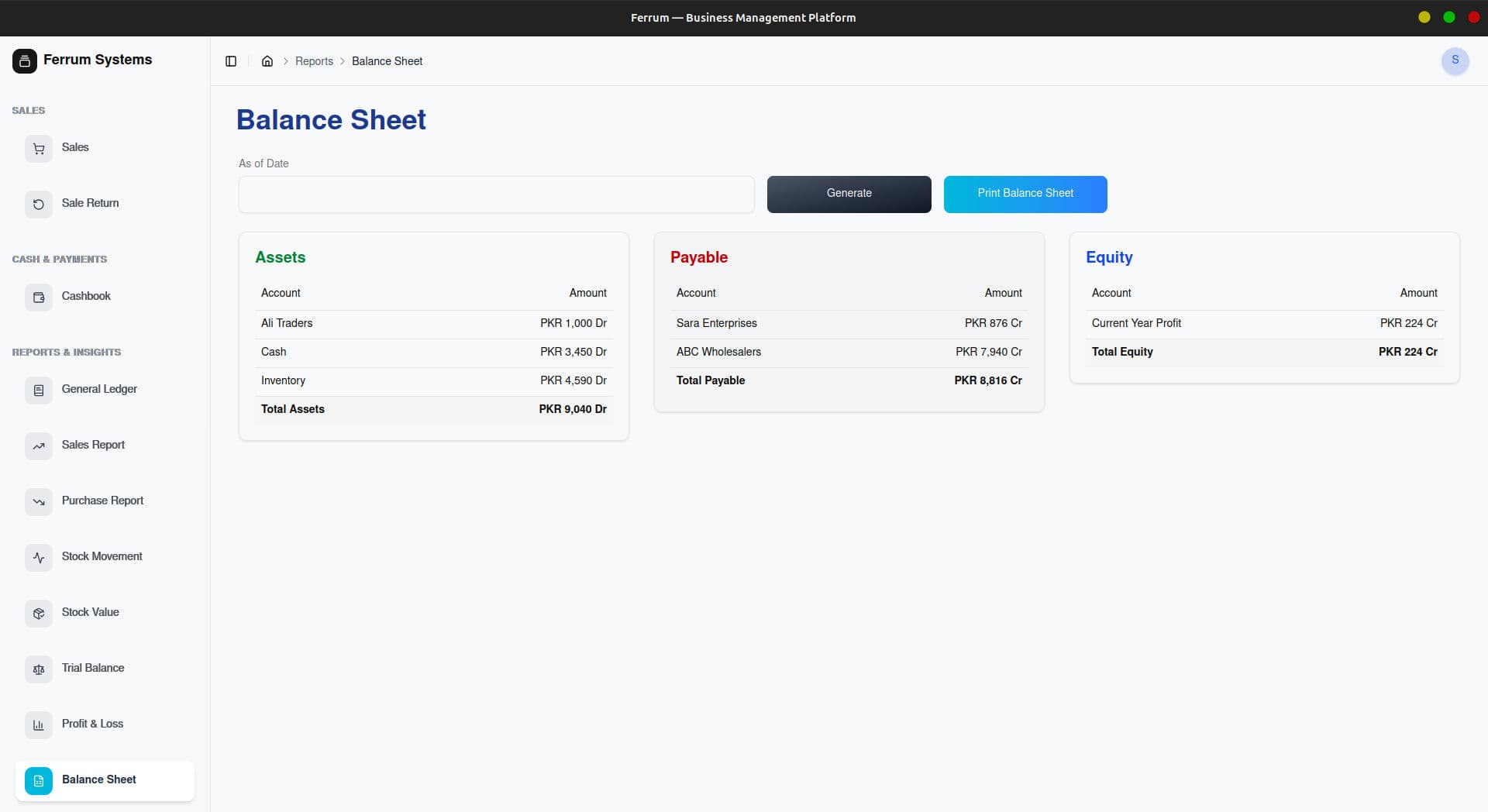
- Balance sheet generation
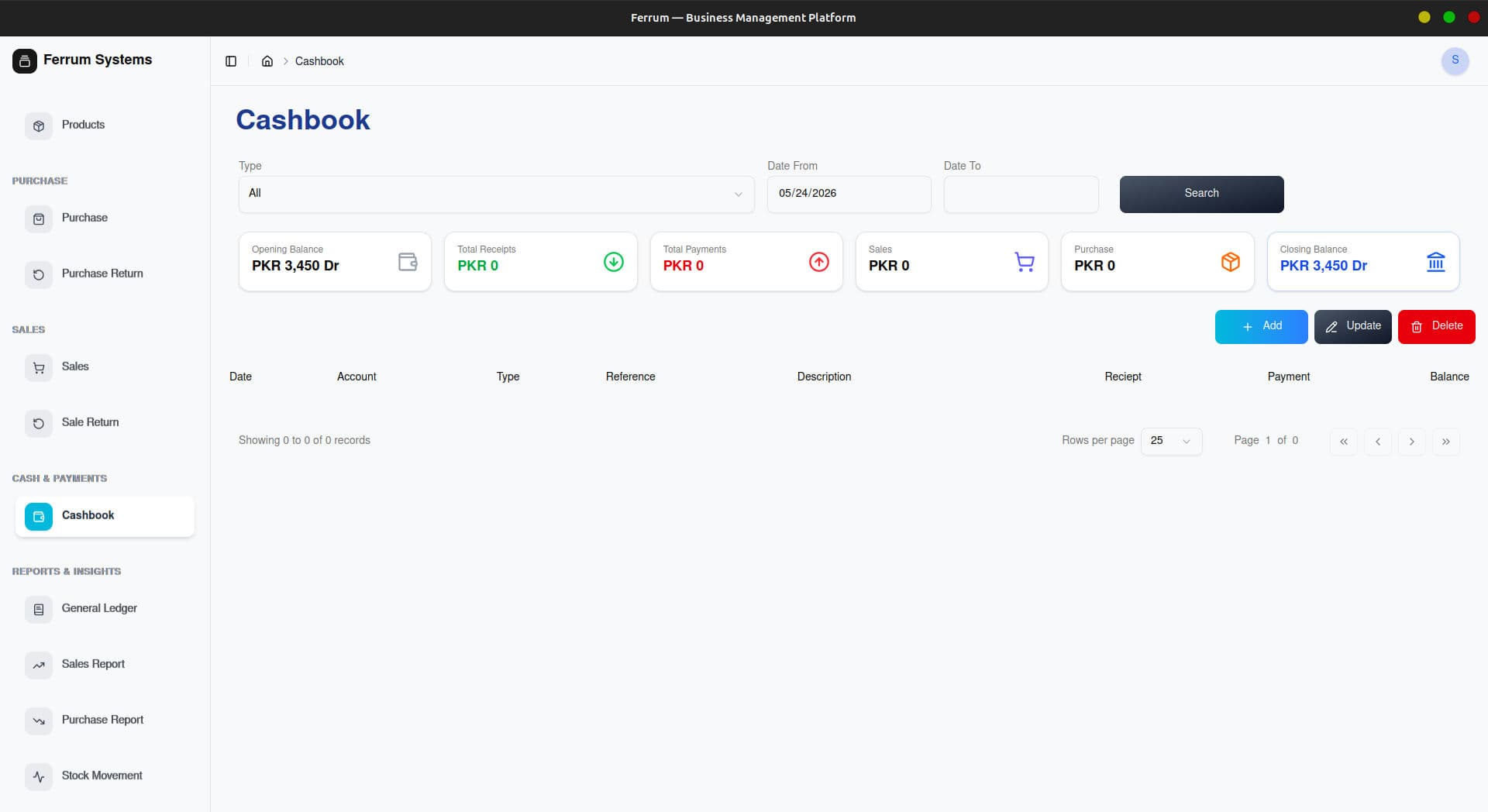
- Cashbook management
- Debit and credit tracking
- Journal entry posting
- Financial period reporting
- Opening and closing balances
- Credit limit handling
- Account blocking and restrictions
Every business transaction posts atomically to the accounting engine while maintaining balanced ledger entries and financial integrity.
Inventory Costing & Financial Integrity
One of the core architectural goals of Ferrum ERP was implementing accurate inventory and accounting synchronization.
FIFO Inventory Costing
The system uses a true FIFO (First-In-First-Out) perpetual inventory costing mechanism instead of simple average costing.
Each purchase creates inventory batches containing:
- Quantity remaining
- Cost price
- Purchase linkage
- Batch history
During sales processing, inventory is deducted from the oldest available batches first, allowing precise Cost of Goods Sold (COGS) calculations and accurate stock valuation.
Sales returns restore inventory back into the original consumed batches to preserve valuation consistency and prevent costing drift.
Atomic Transaction Processing
All financial and inventory operations are executed inside atomic database transactions.
A single sales transaction performs:
- Invoice creation
- Stock deduction
- FIFO batch updates
- Stock movement recording
- Ledger posting
- Receivable/payable updates
- Cashbook updates
If any step fails, the entire transaction rolls back automatically to preserve accounting and inventory consistency.
Reporting & Analytics System
Ferrum ERP includes a complete reporting engine for operational and financial analysis.
Inventory Reports
- Stock movement reports
- Stock valuation reports
- Low stock analysis
- Inventory audit tracking
Financial Reports
- General Ledger
- Trial Balance
- Profit & Loss Statement
- Balance Sheet
- Cashbook Reports
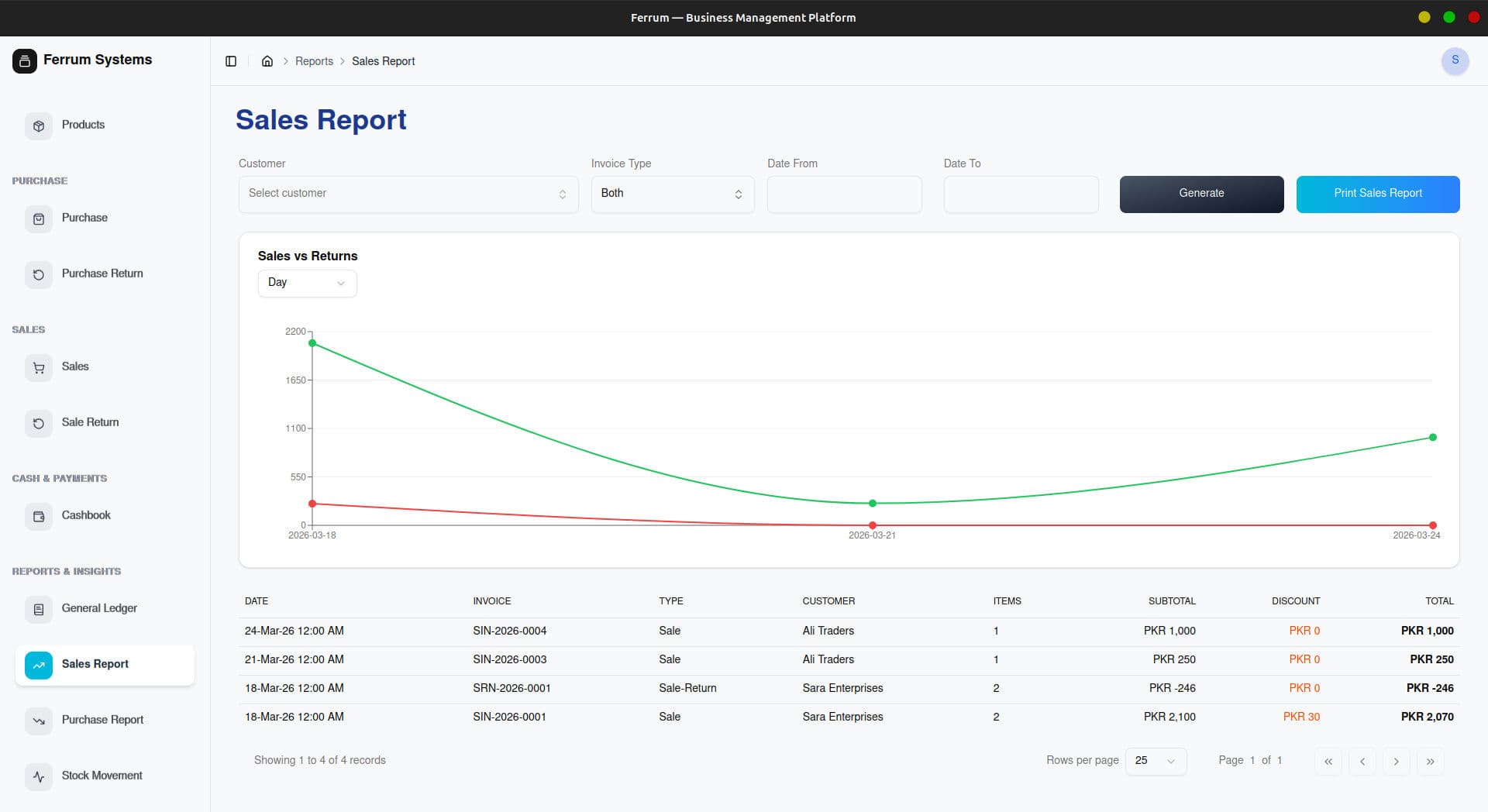
Sales & Purchase Reports
- Customer-wise sales reports
- Supplier-wise purchase reports
- Revenue summaries
- Invoice analytics
Analytics Features
- Interactive business charts
- Revenue trends
- Expense analysis
- Real-time financial metrics
- Exportable PDF, Excel, and CSV reports
The reporting system supports date filtering, aggregation, and drill-down financial analysis.
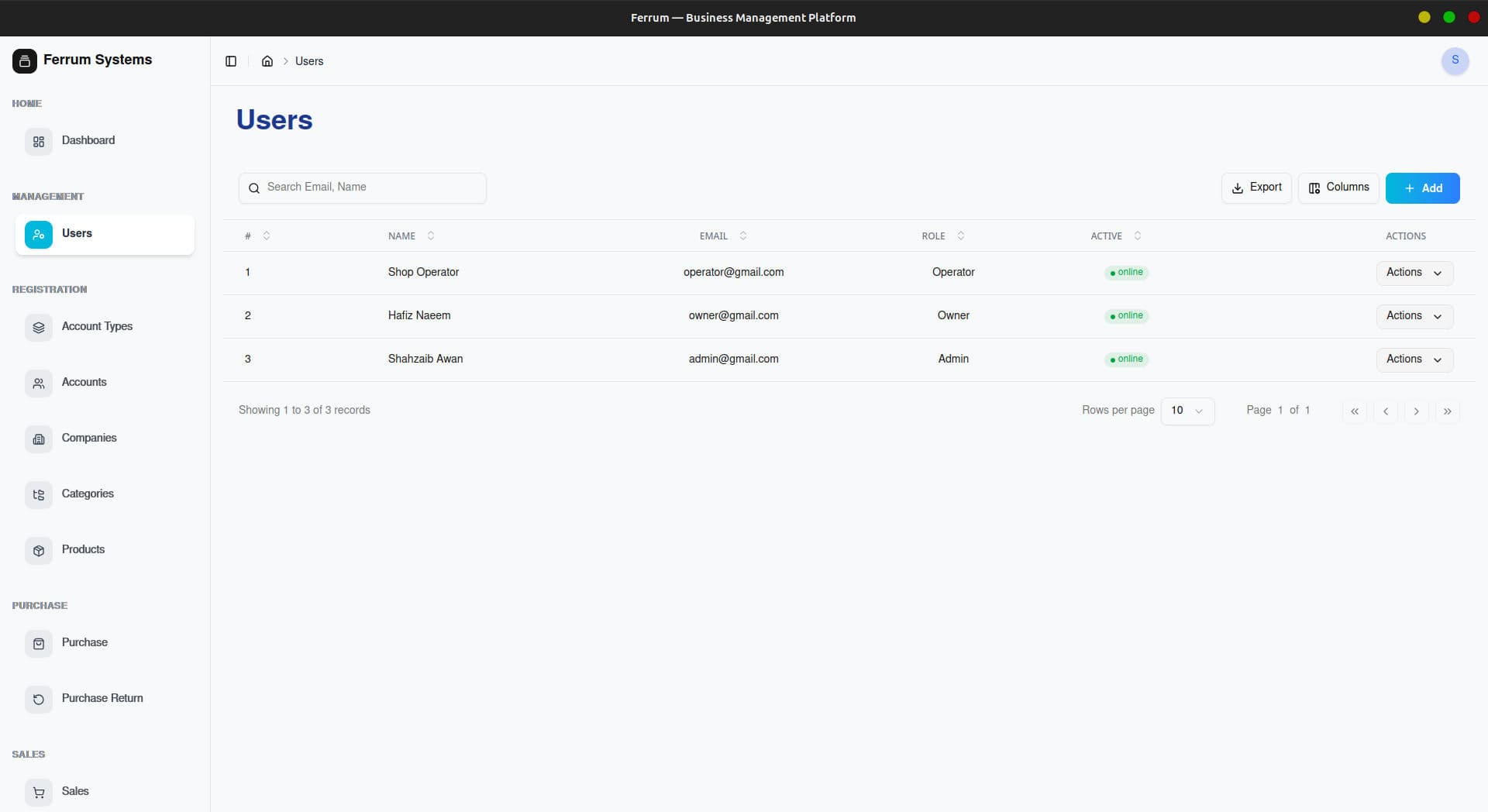
Authentication & Role-Based Access Control
Ferrum ERP supports secure multi-user authentication and authorization.
Security Features
- BCrypt password hashing
- Session-based authentication
- Role-Based Access Control (RBAC)
- Module-level permission handling
- Route and command protection
- SQL injection prevention
- Secure IPC communication through Tauri
- Local encrypted database support
The application supports multiple user roles including administrators, operators, and business owners with configurable permissions across all modules.
Offline-First Desktop Architecture
Ferrum ERP was intentionally designed as an offline-first desktop application to provide maximum reliability and performance.
Offline Features
- Embedded SQLite database
- Local-first data storage
- No internet dependency
- Fast local database queries
- Backup and restore system
- Automated backup workflows
- Complete local data ownership
This architecture eliminates dependency on cloud services while ensuring businesses maintain full control over sensitive operational and financial data.
Technical Architecture
Frontend Architecture
The frontend is built using modern React technologies with scalable component-driven architecture.
Frontend Stack
- React 19
- TypeScript 5.8
- Tailwind CSS 4.1
- Vite 7
- React Router 7
- Zustand
- SWR
- React Hook Form
- Zod
- ShadCN UI
- Recharts
The frontend architecture focuses on modularity, reusable business components, optimized rendering, and responsive desktop UI workflows.
Rust Backend Architecture
The backend is powered by Rust and Tauri for native desktop performance, memory safety, and low system overhead.
Backend Stack
- Tauri 2.0
- Rust
- SQLx
- SQLite
- Tokio
- Serde
- BCrypt
- Chrono
Backend Layers
- Tauri command handlers
- Controllers and services
- Database layer
- Models and DTOs
- Authentication services
- State management
- Error handling system
- Reporting services
The backend handles inventory calculations, financial posting, report generation, authentication, and transactional integrity using async processing and compile-time safety guarantees.
Performance Optimization
Ferrum ERP was optimized to outperform traditional Electron-based desktop ERP systems.
Performance Highlights
- Bundle Size: ~10–15 MB
- Memory Usage: ~50–80 MB
- Cold Start: < 1 second
- Database: Embedded SQLite
- Offline Capability: Fully Functional
The lightweight Tauri runtime, native OS WebView rendering, Rust backend processing, and embedded SQLite architecture enable significantly faster performance with lower resource usage.
Database Design
The application uses SQLite as an embedded relational database with ERP-focused schema design.
Database Modules
- Users
- Roles & Permissions
- Products
- Categories
- Customers
- Suppliers
- Accounts
- Sales
- Purchases
- Sales Returns
- Purchase Returns
- Cashbook
- Financial Transactions
- Journal Entries
- Stock Movements
- Reports
The schema architecture supports transactional consistency, audit trails, inventory costing, and scalable business workflows.
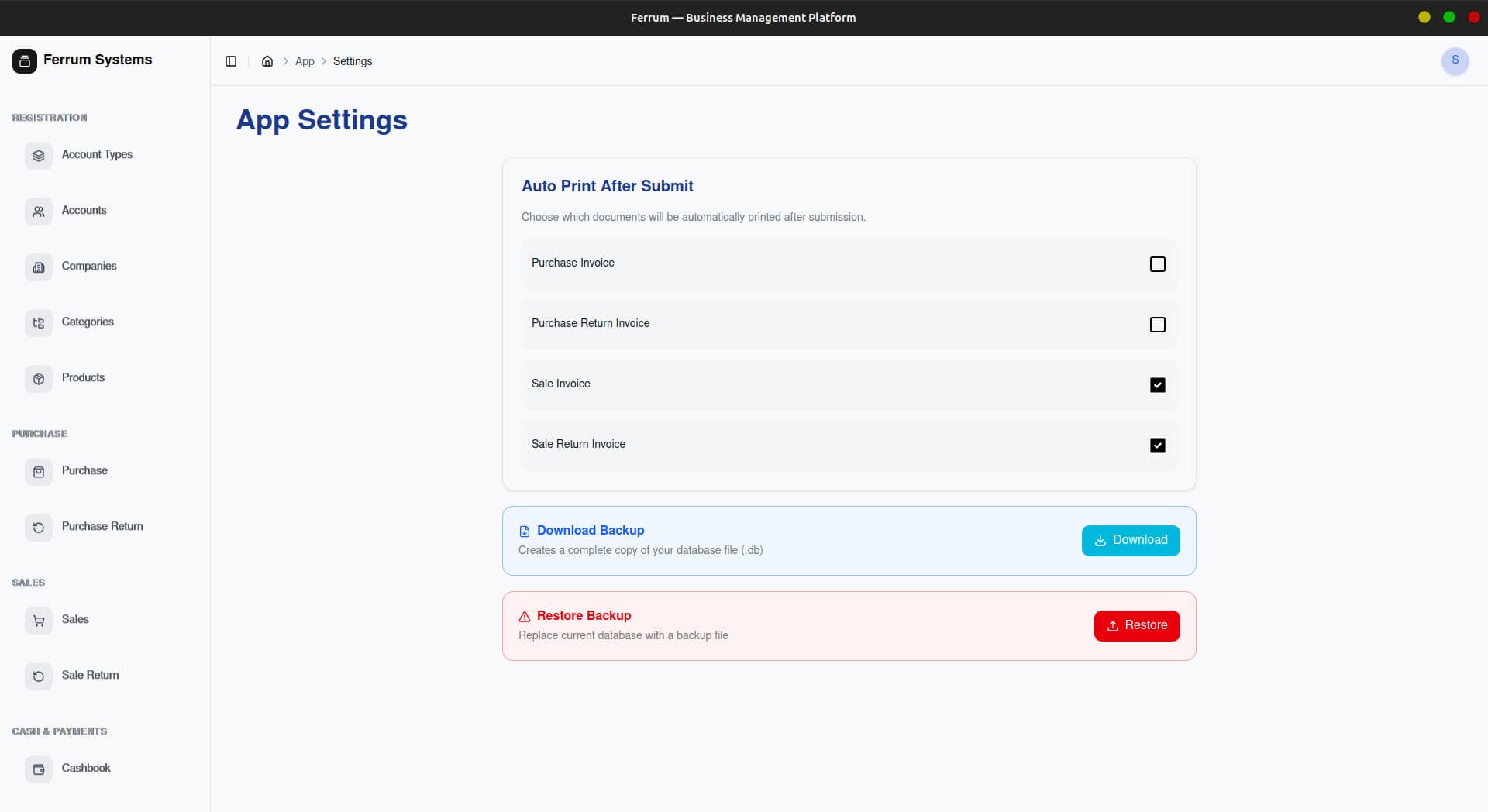
Backup & Restore System
Ferrum ERP includes a built-in disaster recovery and backup management system.
Backup Features
- One-click database backup
- Restore workflows
- Automated backup support
- Local file generation
- Data recovery handling
This ensures operational reliability and secure long-term business data management.
Development Goals
The primary objective of Ferrum ERP was to simulate a real-world enterprise ERP ecosystem while practicing advanced software engineering concepts including:
- ERP system architecture
- Double-entry accounting systems
- FIFO inventory costing
- Desktop application engineering
- Rust backend development
- Financial reporting systems
- POS workflow implementation
- Offline-first architecture
- Role-based security systems
- Atomic transaction handling
- Modular scalable architecture
- Enterprise business logic implementation
The project serves as a large-scale portfolio application demonstrating advanced desktop software engineering, ERP architecture, accounting system implementation, and full-stack enterprise application development.
Technologies Used
Frontend
- React 19
- TypeScript
- Tailwind CSS
- Vite
- React Router
- Zustand
- SWR
- React Hook Form
- Zod
- ShadCN UI
- Recharts
Backend
- Tauri 2.0
- Rust
- SQLx
- SQLite
- Tokio
- BCrypt
- Serde
- Chrono
Reporting & Exporting
- jsPDF
- ExcelJS
- PapaParse
Project Highlights
- Cross-platform desktop ERP platform
- Offline-first native architecture
- Double-entry accounting engine
- FIFO inventory valuation system
- POS and invoicing workflows
- Financial reporting and analytics
- Multi-user authentication system
- Role-based access control
- Rust-powered native performance
- Embedded SQLite database
- Backup and restore system
- Exportable PDF and Excel reports
- Atomic transaction handling
- Modular enterprise architecture
- Lightweight desktop application design
Summary
Ferrum ERP demonstrates the development of a modern desktop ERP and accounting platform using high-performance Rust backend architecture and scalable React frontend technologies. The project combines inventory management, accounting systems, POS workflows, reporting engines, authentication, and enterprise business operations into a unified offline-first desktop solution focused on performance, maintainability, reliability, financial integrity, and real-world business scalability.